Ecotourism Adventures
.jpg)
Yucatan Diving & Travel
Monday, December 6, 2010
Riviera Maya Diving & Travel ecotourism adventures: Yucatan underground treasures
Riviera Maya Diving & Travel ecotourism adventures: Yucatan underground treasures: "My favor dive sites feature in the BBC, what a great honor to be born and being diving there, is a privilege that we shouldn't take it for g..."

Yucatan underground treasures
My favor dive sites feature in the BBC, what a great honor to be born and being diving there, is a privilege that we shouldn't take it for grant ">
Sunday, December 5, 2010
Riviera Maya Diving & Travel ecotourism adventures: Explosion in the Hotel In Rivera Maya
Riviera Maya Diving & Travel ecotourism adventures: Explosion in the Hotel In Rivera Maya: "Yucatan Diving & Travel Recently in the international news was a note about an explosion that kill and hurt a lot of people in a Hotel in t..."
Explosion in the Hotel In Rivera Maya
 Yucatan Diving & Travel
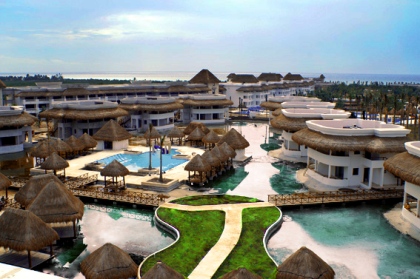
Recently in the international news was a note about an explosion that kill and hurt a lot of people in a Hotel in the Mayan Riviera, this was because the hotel restaurant was built in top a of a cave that was seal during construction, gases accumulate over time and Kaboon, you have an explosion sadly as it is, we shut take a moment of reflexion about this; Which part of changing mother nature has a price we don't understand, the natural harmony that the elements have is for a reason, the old Mayan civilization and all other civilizations of the past knew that, except modern man, we still believe that we can adulterated the environment with out consequences, that we can destroy in the name of progress and evolution, in reality is all about MONEY. Around the area that I grew up is spectacular to see all the construction that is going on, massive hotels with big golf courses, pools, restaurants, etc; that is not bad, is just that in the process they wipe out entirely ecosystems consisting of mangroves and sand dunes in the water front which is the natural barrier for erosion of the beaches, you can take Cancun as example where is no beach left, not to mentioned that is a natural filter for all the water that goes to the ocean, as well as habitat for hundreds of species of flora and fauna. The difference between the old civilizations and the modern one is that they knew where to built they studied the elements of nature to make the settlements for the people by the people to the people in harmonious way with nature, so people and nature can co exist, having the perfect relationship, nature provide what is need it to have a good life, they took what nature give to the them with respect, not in abundance, being sure that something is left for tomorrow; today is take as much as you can because the people behind is gonna take more than you, is all about me, not about us, see the difference? a room with a nice view has more value for some people, that the preservation of the place an culture, the interesting point is that most of the people that owns those places don't leave there, weren't born there, and will never leave there, they not even know the culture. Is just business; I really hope that one day with learn to respect the place that we leave ; Mother nature after all we only have one mother. In yucatandivingtravel.com we use local business that work together with nature. Do you part today
Wednesday, October 27, 2010
Tuesday, September 14, 2010
Monday, August 2, 2010
Seas S.O.S
40 Percent of Species Threatened with Extinction
 The IUCN Red List of Threatened Species has found that two in five organisms are threatened with extinction.
Large marine animals top the extinction risk categories . From sharks to rays, wrasses and whales, the picture painted by this year’s Red List is far from encouraging for the ocean’s heftier inhabitants.
"The findings underline the plight of many species throughout the world’s seas and
oceans, from the Mediterranean to Chinese coasts. Animals that are part of our heritage and have been around since the age of the dinosaurs are now going down the drain,” warns Carl Gustaf Lundin, Head of the IUCN Global Marine Programme.
Sharks and rays are among the first marine groups to be systematically assessed, and of the 547 species listed, 20% are threatened with extinction. This confirms suspicions that these mainly slow-growing species are exceptionally susceptible to over-fishing and are disappearing at an unprecedented rate across the globe.
The Angel shark (Squatina squatina), previously assessed as Vulnerable, has jumped up two categories and is now classed as Critically Endangered, the top threat category. Many of its peers are following the same path. For example, the gulper shark (Centrophorus granulosus) has declined by 80-95% in its main range within the Northeast Atlantic whilst the Australian endemic Harrison’s dogfish (Centrophorus harrissoni) has undergone an even more dramatic decline of over 99% in two decades, fuelled by demand from the fisheries and cosmetics industries.
Sharks, like other large marine species which have naturally slow reproduction and repopulation rates, suffer mostly from overfishing, as well as being killed as bycatch. “As human beings, we can only point the finger at ourselves,” notes Sarah Fowler, Co-Chair of the Shark Specialist Group of the IUCN Species Survival Commission (SSC), “We are the ones driving amazing creatures to extinction.”
“Marine species are proving to be just as much at risk of extinction as their land-based counterparts: the desperate situation of many sharks and rays is just the tip of the iceberg,” said Craig Hilton-Taylor of the IUCN Red List Unit. “It is critical that urgent action to greatly improve management practices and implement conservation measures, such as agreed non-fishing areas, enforced mesh-size regulations and international catch limits, is taken before it is too late.”
Other large creatures such as the Humphead wrasse, the Giant Yellow croaker or the Goliath grouper already benefit from the protection of international treaties such as the Convention on International Trade in Endangered Species of Wild Flora and Fauna (CITES), yet are showing little improvement.
The Humphead wrasse, Napoleon or Maori wrasse (Cheilinus undulatus), a mammoth among coral reef fishes, occurred extensively throughout much of the Indo-Pacific region. Because it is widely threatened, especially by the international live food-fish trade which exerts a high demand for its “plate-sized” juveniles, it is declining in much of its geographic range. Although it is listed as Endangered, uplisted from Vulnerable in 2004, on the IUCN Red List and on Appendix II of CITES, which restricts international
trade in this species, some countries have taken one step further to avert its disappearance from the wild.
Indonesia, its major exporting country, has sharply reduced the export quota to an interim measure of 8,000 fish per year, whilst Hong Kong plans to introduce legislation even more restrictive than that of CITES. Workshops and information campaigns in South-East Asia are also helping to raise public awareness about this species.
“In a dedicated effort to save this wrasse, IUCN, through its Groupers & Wrasses Specialist Group, is working with the Indonesian and Hong Kong Governments to ensure the best knowledge and expertise is available to give the species a hand,” says Dr Yvonne Sadovy, Associate Professor at Hong Kong University and Chair of the IUCN SSC Groupers & Wrasses Specialist Group.
Notwithstanding the daunting statistics unveiled in this year’s IUCN Red List, there is light at the end of the tunnel for some endangered species. The Goliath grouper, which is the largest of all coral reef fishes attaining some two meters in length, entered the IUCN Red List as Endangered in 1996. While it is still in the same category today, encouraging signs of recovery have been reported in southeastern USA, with juvenile densities relatively high in key mangrove areas. This trend is attributed to the availability of good quality habitat and to the effects of a fishing moratorium introduced by the USA in 1990.
“Although the situation is dramatic for many species in most of the world’s waters, there is definitely a ray of hope,” underlined Lundin, “the Goliath grouper shows that progress can be made, no matter how bleak the outlook, so the time to act is now before we lose the marine life that sustains our planet and ourselves.”
* source from scuba news
Thursday, July 22, 2010
Why Ecotourism?

There is a lot of controversy about ecotourism, the reality is there is a lot of people misusing the name Eco, I found in the internet a few all inclusive resorts that they advertise as ecotourism; How in heaven a all inclusive resort can be ecotourism? the answer was (oh, I did call the people that certified the all inclusive resort) that they are creating jobs! That is the way to contribute to the local economies, they can sell that garbage to somebody else, there is only one reason why all inclusive exist in country's under development or third world country's, that is because LABOR IS CHEAP, THAT ARE NO LABOR RIGHTS, NO UNIONS, NO ENVIRONMENTAL LAWS and; if there is any, you can buy your way around, since all those country's are infamous because the corruption, why there is no many all inclusive' s in the development country's ?(USA,Canada, Germany,etc) because nature and human have rights in such a places.
Sustainable tourism is to enjoy the local culture, cuisine, traditions and people of the place that you are visiting to eat in taco stands, or to buy fruit from the local farmers, have a meal in the eatery that has no English menu so they have to take to the kitchen a point the food and make animal noises so you can find if there is chicken or beef; to use hotels that have environmentally friendly products and the most important to feel that you learn something in your vacation, to have a pleasant experience in your suitcase when going back home; please don't let those big corporations fool you...till them stay safe and have a great day
www.yucatandivingtravel.com
Wednesday, June 23, 2010
Thursday, May 13, 2010
Sustainable traveling

I recently read an article about sustainable traveling and how some regions of the world are changing because people are becoming more money oriented than eco oriented, but they still complaint about the area that they visit and how they imagine something different that they encounter, what a surprise; if we want to preserve the places that we visit and the way they look, we need to support the local economies and cultures; so the economical benefit will be for that society and not for a corporation; that is sustainable traveling, that way they don't have to sell to the massive emporiums that the only thing in mind is to make money to any cause with out any consideration of nature and cultures. Think again before you decide where to stay and what kind of person are you? A traveler or a tourist? Tourist stay in cages and never leave the place where they stay, they want everything deliver to them, don't care about nothing than just themselves, is this wrong? not for me to judge; I prefer travelers, people who cares about cultures and ecosystems and interact with them, who wants to learn and experience freedom, who dare to have adventures and think outside the box, that is sustainable tourism. Have a wonderful day
yucatandivingtravel.com
Subscribe to:
Posts (Atom)